
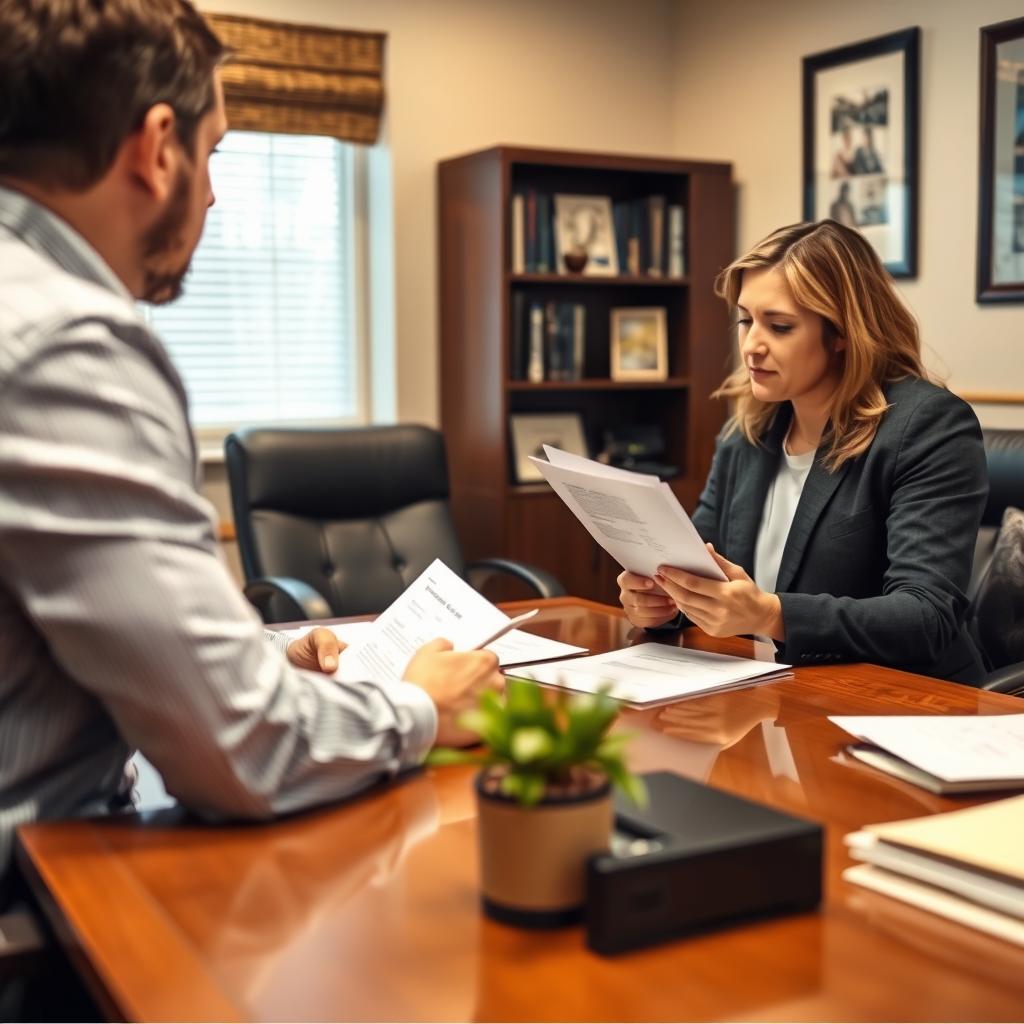
What are the consequences of refusing a breath test in Virginia
Refusing a breath test after a DUI arrest in Virginia triggers serious, escalating consequences that can include mandatory license suspension and, for repeat refusals, criminal charges. Under Virginia’s implied-consent law, any driver who operates a motor vehicle on a public highway has already consented to a chemical test of breath or blood if arrested for driving under the influence. An unreasonable refusal to submit to testing after a lawful arrest is itself a violation. A first refusal is a civil infraction that carries a one-year license suspension with no restricted permit. A second refusal within ten years becomes a Class 2 misdemeanor, and a third refusal is a Class 1 misdemeanor, exposing the driver to jail time and a criminal record. The consequences are layered on top of the underlying DUI charge, compounding the risk. Law Offices Of SRIS, P.C. represents drivers facing refusal allegations. Reach our firm at (888) 437-7747 to discuss your situation.
Law Offices Of SRIS, P.C. – Advocacy Without Borders.
What Is Breath Test Refusal Under Virginia Law?
Virginia Code § 18.2-268.3 codifies the implied-consent rule. Any person who drives in Virginia consents to provide a breath or blood sample if lawfully arrested for a DUI offense. The officer must have probable cause for the arrest, and the refusal must be unreasonable. If the driver refuses the breath test, and the refusal is deemed unreasonable, the driver faces administrative and potentially criminal penalties that are separate from the resolution of the DUI charge itself. The refusal is handled at a separate hearing before the general district court. This framework applies regardless of whether the driver is ultimately convicted of the underlying DUI. Because the refusal penalties are administrative in the first instance, they are often less visible to drivers than the DUI charge, but they can be equally disruptive.
Under Va. Code § 18.2-268.3, a first refusal is a civil infraction with a mandatory one-year license suspension; a second refusal within ten years is a Class 2 misdemeanor; a third refusal is a Class 1 misdemeanor.
Source: Va. Code § 18.2-268.3. Virginia Code § 18.2-268.3
Reviewed by Mr. Sris, admitted in VA/MD/DC/NJ/NY.
Consequences of Refusing a Breath Test in Virginia
The consequences depend on the driver’s prior refusal record within the previous ten years. A first refusal is a civil infraction. The driver’s license is suspended for one year. There is no provision for a restricted license during that period, and the suspension takes effect immediately upon a finding of unreasonable refusal. The driver may have a limited right to challenge the suspension at an administrative hearing, but the suspension is mandatory if the refusal is found to be unreasonable.
A second refusal within ten years elevates the matter to a criminal offense. It is prosecuted as a Class 2 misdemeanor, punishable by up to six months in jail and a fine of up to $1,000. The license suspension extends to three years. A third refusal within ten years is a Class 1 misdemeanor, carrying up to twelve months in jail and a fine of up to $2,500. The license suspension may be indefinite until a court orders restoration. All refusal convictions carry DMV demerit points and potential increases in insurance premiums. In addition, a refusal can be used as evidence of consciousness of guilt in the underlying DUI case.
How Mr. Sris and His Of Counsel Handle Breath Test Refusal Cases
When a driver is charged with refusal, the first step is to evaluate the legality of the stop and the arrest. Mr. Sris, a former prosecutor, and his Of Counsel team analyze whether the officer had probable cause for the DUI arrest and whether the refusal warning was properly administered. They examine the procedures followed: was the driver given the correct statutory warning? Was there a language barrier or confusion about the consequences? Any procedural defect can form the basis for challenging the refusal. If the refusal is found to be unreasonable at the administrative hearing, Mr. Sris and his Of Counsel may also challenge the evidence at the criminal trial for the underlying DUI. Their experience includes handling cases where the refusal is disputed because the driver was not actually operating the vehicle, or the officer lacked reasonable suspicion. The team works to protect the driver’s driving privileges and to minimize the overall impact of the refusal on the DUI charge.
About Mr. Sris and His Of Counsel Team
Mr. Sris, Owner and Founder of Law Offices Of SRIS, P.C., is a former prosecutor who has concentrated his practice on criminal defense and traffic matters since 1997. He is admitted in Virginia, Maryland, the District of Columbia, New Jersey, and New York. Mr. Sris testified before the Virginia House Courts of Justice Committee in support of 2019 HB 635 (chief patron Del. David Bulova). His Of Counsel team includes attorneys with extensive experience in DUI and refusal defense, including a former Virginia State Trooper and a former Maryland prosecutor, both of whom understand law-enforcement procedures and courtroom advocacy. Mr. Sris and his Of Counsel bring over 120 years of combined legal experience, backed by 4,739+ documented firm-wide results. Results may vary.
Frequently Asked Questions
What are the penalties for refusing a breath test in Virginia?
A first refusal is a civil infraction with a mandatory one-year license suspension; a second refusal within ten years is a Class 2 misdemeanor, and a third is a Class 1 misdemeanor. The first-offense suspension has no restricted permit, and the license is revoked for one year. A second-offense criminal penalty can include up to six months in jail and a fine of up to $1,000, plus a three-year license suspension. A third offense exposes the driver to up to twelve months in jail and a fine of up to $2,500. All refusal findings carry DMV demerit points and may affect insurance costs. For guidance on your specific situation, reach Law Offices Of SRIS, P.C. at (888) 437-7747.
What should I do if I am facing breath test refusal charges in Virginia?
If you are facing a breath test refusal charge, you should contact an attorney immediately to protect your driving privileges and prepare for the administrative and criminal proceedings. Do not discuss the facts of the stop or the arrest with anyone except your lawyer. The court will schedule a refusal hearing separate from the DUI case, and you have a limited time to request the hearing so that your license is not automatically suspended. Collect any documents that relate to the stop, including the summons and any paperwork from the officer. To discuss the details of your matter, contact Law Offices Of SRIS, P.C. at (888) 437-7747.
How does a Virginia lawyer defend against breath test refusal charges?
A Virginia lawyer defends against a refusal charge by challenging the legality of the DUI stop, the administration of the implied-consent warning, or the reasonableness of the refusal itself. Common defenses include showing that the officer lacked probable cause for the arrest, that the driver was not properly advised of the consequences of refusal, or that a medical condition prevented the driver from providing a breath sample. If the underlying DUI charge is dismissed or reduced, the refusal consequences may also be mitigated. A lawyer can also negotiate with the prosecutor to amend the refusal to a lesser charge in certain circumstances. For a consultation, reach Mr. Sris and his Of Counsel at (888) 437-7747.
Can a breath test refusal be used against me in my DUI case?
Yes, an unreasonable refusal can be introduced as evidence of consciousness of guilt in a DUI prosecution, potentially making it harder to defend against the DUI charge. The refusal itself does not automatically prove intoxication, but a judge or jury may infer that the driver refused because they believed the test would show a high blood alcohol concentration. This inference can be rebutted by showing an alternative reason for the refusal, such as confusion, language difficulty, or a medical condition. Having an attorney who can challenge the refusal at the administrative level is important because a finding of unreasonable refusal can influence the DUI case. For guidance, reach Law Offices Of SRIS, P.C. at (888) 437-7747.
How long does a breath test refusal stay on my record in Virginia?
A first-offense civil refusal stays on your driving record for eleven years in Virginia, with the license suspension itself lasting one year. The refusal remains on your record as a separate entry from any DUI conviction. A criminal refusal conviction, even a Class 2 misdemeanor, creates a permanent criminal record that does not automatically expire. This can affect employment, professional licensing, and international travel. Virginia does allow for certain records to be sealed after a period of time, but the eligibility depends on the specific charge and outcome. To discuss your situation, contact Law Offices Of SRIS, P.C. at (888) 437-7747.
Is a breath test refusal the same as a DUI in Virginia?
No, a breath test refusal is a separate administrative or criminal charge independent of the underlying DUI, and you can be penalized for refusal even if the DUI is dismissed. The two charges arise from the same traffic stop but are adjudicated separately. A refusal finding by itself does not require the state to prove that you were intoxicated; it only requires proof that you unreasonably refused to provide a breath or blood sample. This means that even a successful defense of the DUI charge may not eliminate the refusal penalty, although a lawyer can sometimes negotiate a global resolution that addresses both matters simultaneously. To discuss your specific situation, reach Mr. Sris and his Of Counsel at (888) 437-7747.
Virginia Traffic Law Practice · Virginia DUI Defense · Virginia Reckless Driving Defense · Virginia Traffic Ticket Representation
Primary sources: Virginia Code § 18.2-268.3 · Virginia Judicial System · Virginia Code (LIS)
Attorney advertising. Prior results do not guarantee a similar outcome. Case results depend on a variety of factors unique to each case. Results may vary.